
Journeys · India
Ganges Voyage, Kolkata to Varanasi
Twenty days and thirteen hundred kilometres against the current, from the Hooghly at Kolkata to the burning ghats of Varanasi. This is the old trunk route of Bengal and Bihar: terracotta temples at Kalna,…
- Length
- 20 days, 19 nights
- From
- ₹10,85,000
- Pace
- Balanced
- Stops
- 7
- Best months
- October to March
The route
7 stops over 20 days
- Kolkata
- Kalna
- Matiari
- Murshidabad
- Farakka
- Patna
- Varanasi
- Rising through the Farakka lock into the Ganges proper
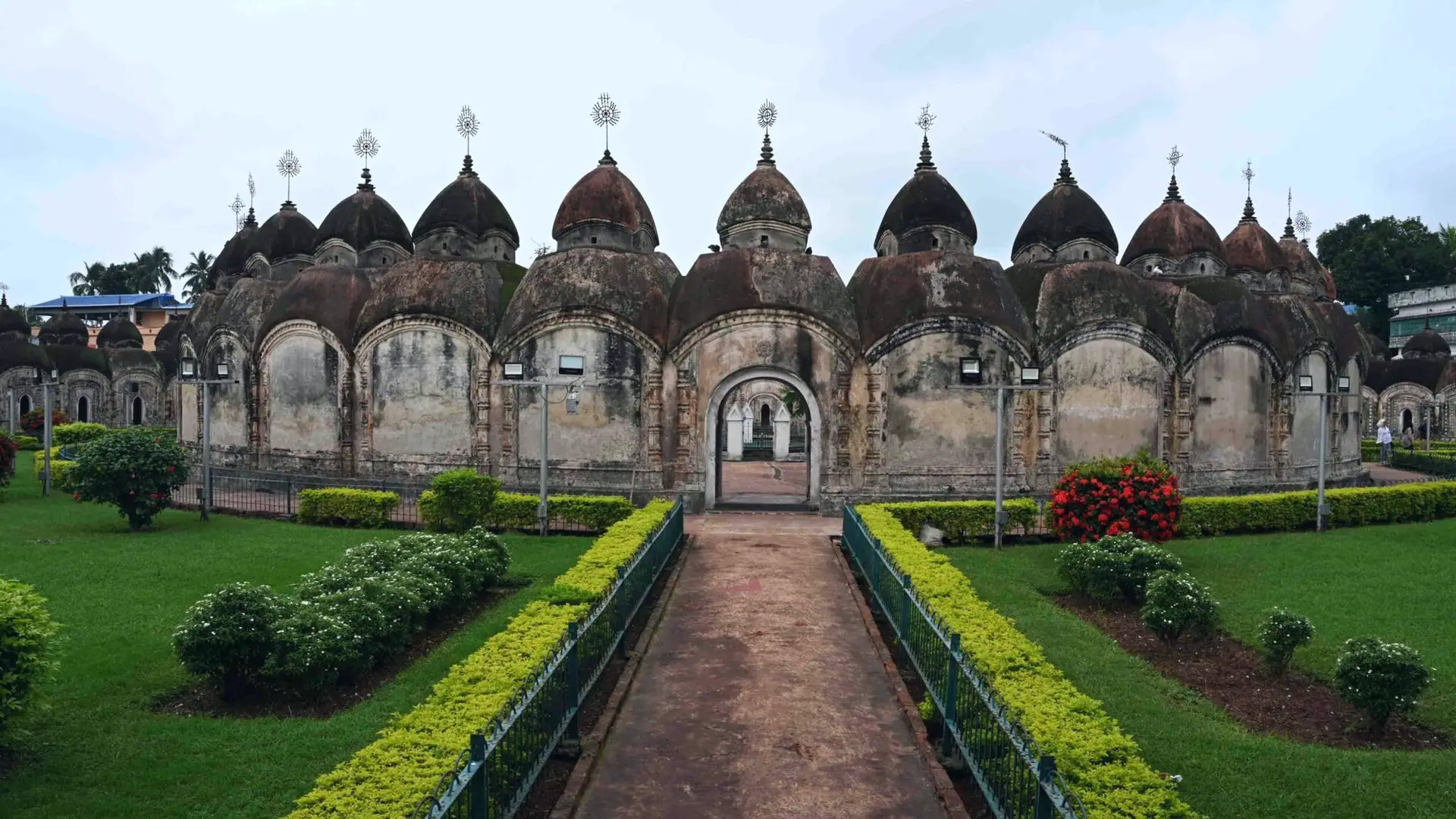
- One hundred and eight Shiva temples in two rings at Kalna
- Hazarduari’s thousand doors and Siraj-ud-Daulah’s grave at Khushbagh
- Brass beaten into water pots in Matiari’s courtyards
- Ganga aarti at Dashashwamedh watched from the water
Day by day
What actually happens
- Length
- 20 days
- Stops
- 7
- Pace
- Balanced
- From
- ₹10,85,000
-
1D
Kolkata
Arrive in Kolkata
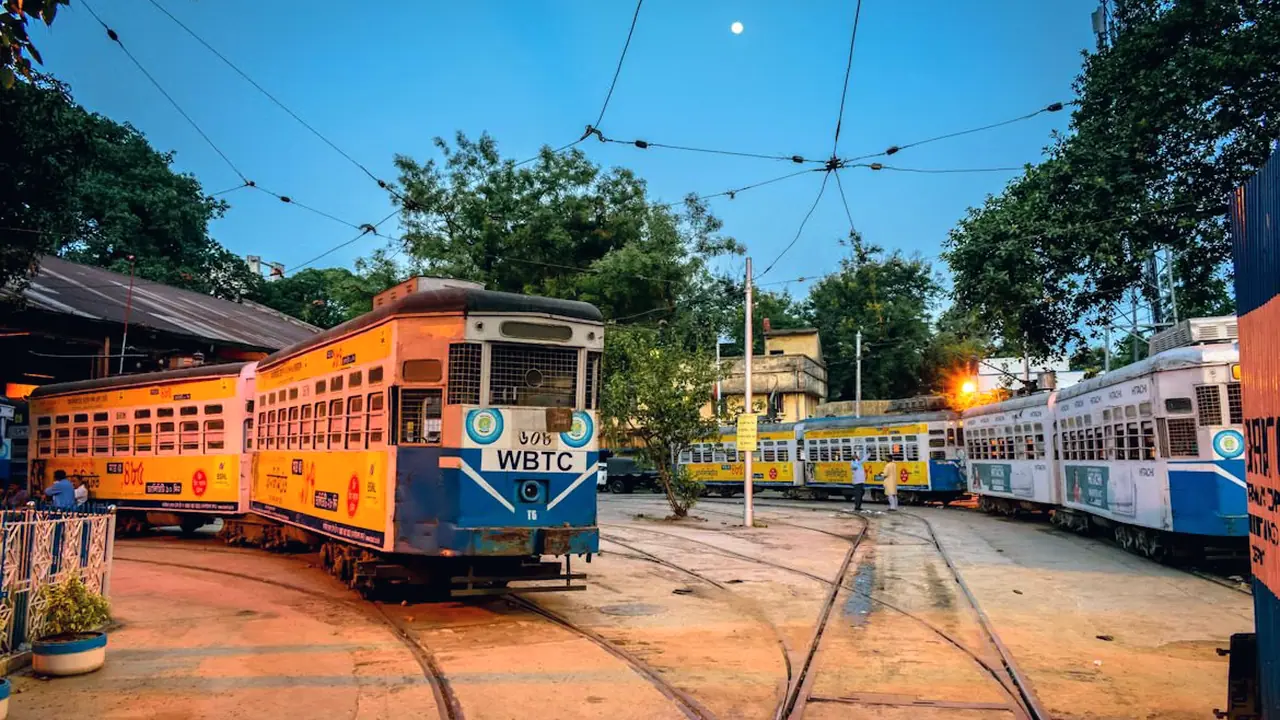
You land at Netaji Subhas Chandra Bose and are driven into a city that still runs on trams and hand-pulled rickshaws in parts. Check in on Chowringhee; there is nothing else to do today. If you are awake at five, the Maidan fills with football, goats and men doing yoga, and it is worth the walk.
Night: The Oberoi Grand, Kolkata
-
2B L D
Kolkata
Kumartuli and north Calcutta
North first, to Kumartuli, where the idol-makers build Durga from Hooghly clay and straw all year for ten days in October. Then the Marble Palace, a private house of 1835 with old masters on the walls and pelicans in the yard. Afternoon at the Victoria Memorial and, at dusk, tea and a fish cutlet at a Bhowanipore adda.
Night: The Oberoi Grand, Kolkata
-
3B L D
Kolkata
Aboard at Outram Ghat
The Botanical Garden across the river holds a banyan two hundred and fifty metres around, its original trunk long dead. You board at Outram Ghat at noon and sail upstream on the flood, under Howrah bridge, past Belur Math’s borrowed domes and Dakshineswar’s twelve spires. Anchor off Barrackpore. First dinner on board: hilsa, if the season allows.
Night: Overnight on board
-
4B L D
Chandannagar and Bandel
French Chandernagore, Portuguese Bandel
Three empires in one morning. Chandannagar keeps its riverside Quai, a Sacred Heart church with a rose window, and street signs still lettered in French. Hooghly’s Imambara has a clock wound by two men with a long key. Bandel Basilica, founded in 1599, holds the mast of a ship whose captain prayed his way out of a storm. Sail after tea.
Night: Overnight on board
-
5B L D
Kalna
Kalna’s terracotta town
Kalna by cycle rickshaw, which is the correct speed for it. The Rajbari compound has half a dozen temples in one yard, their brick faces panelled with terracotta scenes: battles, boats, a European in a hat smoking a pipe. Across the road, the Nabakailash — one hundred and eight Shiva temples in two concentric rings, whitewashed and quiet.
Night: Overnight on board
-
6B L D
Mayapur and Nabadwip
Mayapur and the Bhagirathi
The Hooghly becomes the Bhagirathi somewhere about here, and the banks get quieter. Mayapur is the Vaishnav headquarters — a marble temple still going up, kirtan from loudspeakers at all hours, and a cow shed of eight hundred animals. Nabadwip opposite was a seat of Sanskrit logic in the twelfth century. Evening: a lecture on Chaitanya over rum on the sundeck.
Night: Overnight on board
-
7B L D
Matiari
The brass beaters of Matiari
You hear Matiari before you see it. In courtyards along the lane, families beat sheet brass into water pots over charcoal, four hammers to a rhythm none of them has to think about. A finished kolshi takes a day and sells for very little. Later the ship anchors off a sandbank and the crew set up chairs for sundowners.
Night: Overnight on board
-
8B L D
Murshidabad
Hazarduari and Khushbagh
Murshidabad was the richest city in Bengal until 1757. Hazarduari, built for the Nawab in 1837, is a Greek-revival palace of a thousand doors, most of them false. Across the river at Khushbagh lies Siraj-ud-Daulah, defeated at Plassey and buried among roses. Then Katra Masjid, whose founder is interred under the entrance steps so that pilgrims tread on him.
Night: Overnight on board
-
9B L D
Baranagar
Baranagar’s small temples
Baranagar is four terracotta temples in a field, built by a widow queen in the 1750s and rarely visited by anyone. The Char Bangla panels are the best of their kind on the river: Krishna, hunting scenes, a woman at her toilet. Sailing on, the banks change — fewer villages, more silt, the first proper sandbanks and skimmers working them.
Night: Overnight on board
-
10B L D
Farakka
Through the lock at Farakka
Farakka takes most of the day. The ship enters the navigation lock beside the barrage, the gates close, and you rise a few metres from the Bhagirathi into the Ganges proper — a different river, wider, paler, moving with more intent. Watch the process from the top deck with a cup of tea; there is no better way to spend an hour.
Night: Overnight on board
-
11B L D
Rajmahal and Sahibganj
Rajmahal and the fossil hills
Into Jharkhand. Rajmahal was Akbar’s provincial capital and has a stone audience hall, Singhi Dalan, standing in a mango grove above the water. Up the hill at Sahibganj, the fossil park holds petrified conifers from a hundred and eighty million years ago, lying about like firewood. Gangetic dolphin are regular through this reach; the pilot will slow for them.
Night: Overnight on board
-
12B L D
Vikramshila
Vikramshila and Bateshwar
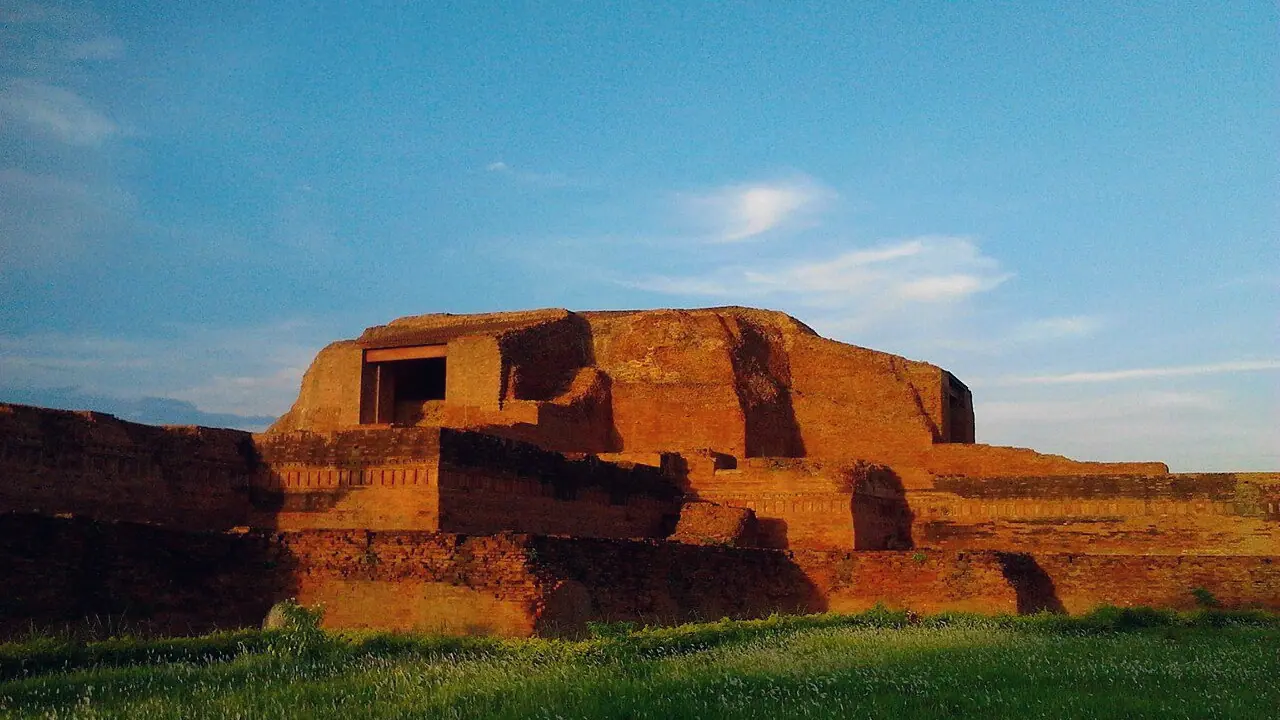
At Antichak, the excavated remains of Vikramshila: a cruciform brick stupa on a vast platform, and the cells of a university that taught tantra to Tibet until Bakhtiyar Khalji arrived around 1200. Quiet now, with parakeets in the trees. Downstream a little, Bateshwar Sthan’s rock temples sit right at the waterline, and the Ganges here turns north for a stretch.
Night: Overnight on board
-
13B L D
Sultanganj
Ajgaivinath at Sultanganj
A granite outcrop in mid-river, carved on every face with Shiva and Ganga and a good deal of graffiti from the seventh century onward — Ajgaivinath, where in July barefoot kanwariyas fill brass pots and walk a hundred kilometres to Deoghar. In January the rock is nearly empty. Afternoon sailing to Munger, with the Kharagpur hills grey to the south.
Night: Overnight on board
-
14B L D
Munger
Munger: fort, yoga, guns
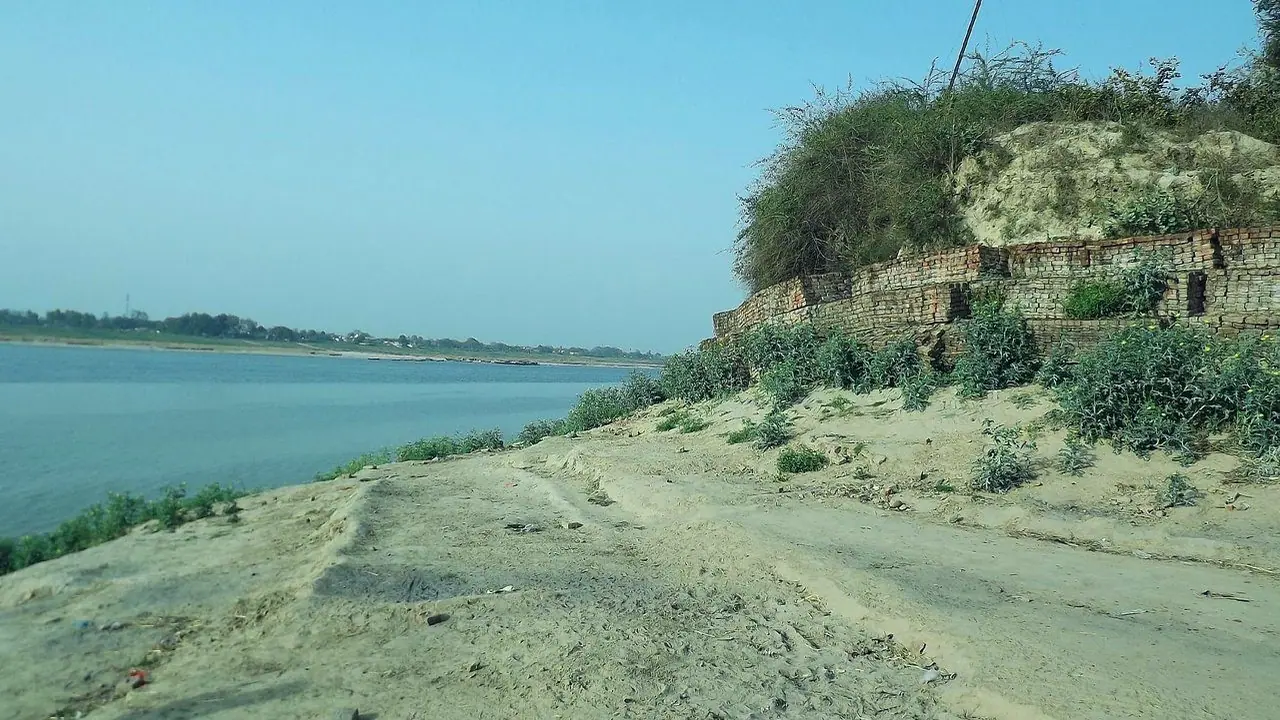
Munger’s fort walls run three miles along the bank, put up by Mir Qasim when he moved his capital here in 1762 to get away from the English. Inside is the Bihar School of Yoga, which taught the West a good deal of what it thinks it knows about pranayama. The town also makes shotguns, legally and otherwise.
Night: Overnight on board
-
15B L D
Barh and Nalanda
A day out to Nalanda
From Barh it is an hour and a half south to Nalanda, where the monastery blocks survive in orderly rows of brick and the stupa of Sariputta still stands seven storeys of stair. Xuanzang studied here for years. Rajgir on the way back for the hot springs and the Griddhakuta ridge, where the Buddha preached the Lotus Sutra.
Night: Overnight on board
-
16B L D
Patna
Patna, once Pataliputra
Patna hides its age well. The museum keeps the Didarganj Yakshi, a Mauryan sandstone figure polished to a shine you can see your hand in. Golghar, the beehive granary of 1786, gives the best view of the river. At Takht Sri Patna Sahib, birthplace of Guru Gobind Singh, the langar feeds anyone who sits down, including you.
Night: Overnight on board
-
17B L D
Vaishali
Vaishali and the Ashokan lion
North bank today. At Kolhua an Ashokan pillar of polished sandstone, single-piece, topped with a lion facing north towards Kushinagar, stands where the Buddha preached his last sermon. Vaishali also gave the world one of its earliest republics. If time allows, Kesaria’s huge brick stupa, still half-buried, rising out of the paddy like a hill someone forgot.
Night: Overnight on board
-
18B L D
Buxar and Ghazipur
Buxar and the Ghazipur road
Buxar, where in 1764 the Company’s victory over three Indian armies effectively handed it Bengal’s revenues. The battlefield is farmland now; the Ramrekha ghat is busier. Sailing on into Uttar Pradesh, the ship passes Ghazipur’s government opium factory — still working, still closed to visitors — and Cornwallis’s tomb, a domed rotunda kept by the Archaeological Survey.
Night: Overnight on board
-
19B L D
Chunar and Varanasi
Chunar fort, then Varanasi
Chunar’s fort sits on a sandstone spur that has been fortified since before Sher Shah, who is buried nearby at Sasaram. The quarry below supplied the stone for Ashoka’s pillars. In the late afternoon the ship comes up past Ramnagar to Varanasi itself: you watch the Ganga aarti at Dashashwamedh from the water, at a proper distance, with the bells starting at six.
Night: Overnight on board
-
20B
Varanasi
Dawn on the ghats, then home
Out at half past five in a rowing boat, downstream from Assi to Manikarnika as the light comes: bathers, dhobis, a body being carried down, a man doing surya namaskar on a plinth. Breakfast on board, then disembark. Sarnath — the Dhamek stupa and the museum’s lion capital — if your flight permits. Transfer to Varanasi airport. Departure day.
Night: Departure day — no overnight
What the price covers
- Two nights in Kolkata and seventeen aboard, all cabins with private facilities
- Full board throughout, with Bengali and Bihari dishes at most meals
- Every shore excursion, guide, entrance fee and cycle rickshaw
- An onboard lecture programme on Bengal, the Company and the Ganges
- All road transfers, including the Nalanda and Rajgir day trip
- Kolkata and Varanasi airport transfers
- Port charges, lock fees at Farakka and applicable GST
What it does not
- International flights and internal air sectors
- Indian e-visa; travel insurance is compulsory
- All alcoholic drinks
- Camera fees at Nalanda, Sarnath and Vaishali
- Tips and items of a personal nature
Prices are per person on twin share and are a guide only — the final figure depends on your dates, your party size and the properties you choose.
Enquire
Ask us to redraw this one around you
Tell us your dates and what you would change. You will have a first draft within one working day.
Journeys that go somewhere similar
Sri Lanka Serenity: Culture, Highlands & Coast
- Colombo
- Dambulla
- Polonnaruwa
- Sigiriya
- +4 more
Sri Lanka by Bicycle: Highlands & Cultural Trails
- Dambulla
- Sigiriya
- Madatugama
- Matale
- +2 more
Bhutan in Festival: Paro Tsechu
- Paro
- Thimphu
- Punakha
- Chele La
- +2 more